What is stacking?
Stacking is applying layered savings on a purchase to minimize your overall cost and maximize your total savings.
Cashbacking helps you see how each savings layer works together, from store discounts and coupons to card offers, cashback portals, and card rewards. You do not need every layer for every purchase, but the best stacks often combine several of them.
Sale Price
Start with the lower store sale price.
Coupon
Take off extra percent or dollar savings.
Card Offer
Extra savings from your card, like 'Spend $100, get $20 back.'
Cashback Site
Earn cashback from portals like Rakuten or Capital One Shopping.
Card Rewards
Earn cashback, points, or miles from your credit card.
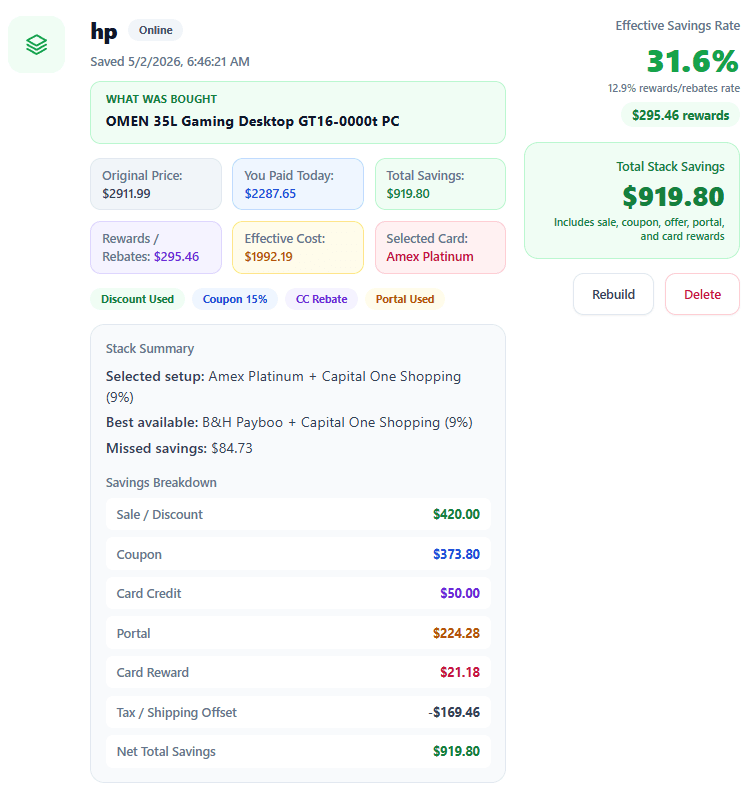
One actual purchase using all five layers
This OMEN purchase combined a sale price, coupon, card offer, cashback portal, and card rewards into one stack.
How to use the calculator
Start simple. Add advanced savings only when they apply to your purchase.
Enter the price
Start with the regular price or the price you are comparing against.
Enter the store
Pick where you are buying so the right store and card logic can be used.
Pick a card
Choose the card you plan to use, or compare against other cards.
Add advanced savings
Open advanced settings when you want to add coupons, card offers, portal cashback, or other savings.
See the real cost
Review your total savings, rewards, rebates, missed savings, and effective final cost.
Save or reuse
Save strong stacks so you can reference them later or rebuild similar purchases.